
"land reclamation"
300 article(s) found

Guatemala Pacamara Coffee Bean Roast Flavor Description Estate Introduction
Guatemala Pacamara Coffee Bean Roast Degree Flavor Description Estate Producing Area Introduction Between 1950 and 1954, when President Jacobo Árbenz was in power, agrarian reform was implemented, and large landowners, who accounted for 2% of the country's population, occupied about 70% of the country's arable land.Árbenz wrote a check for agrarian reform, promising to buy up land held by large landowners and redistribute it to small farmers. Arbens won with it.
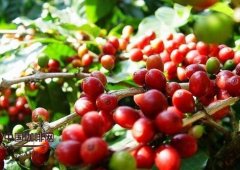
Coffee treasures from the hometown of giant turtles, this kind of coffee treasures, excellent quality coffee beans
Coffee treasures from the hometown of giant turtles, which are of excellent quality and do not use any chemicals when growing. Coffee is grown in San Cristobal (SaintCrstbal). St. Cristobal is a larger island in the Galapagos Islands (GalapagosIslands) and the only one in the archipelago with plenty of fresh water. At 410 meters above sea level on the island

Get to know Ecuadorian coffee
You may know the name of Ecuador because of football, because of the reputation of the country of bananas, or because of the rare animals and plants of the Galapagos Islands. Indeed, Ecuador, a South American country, has a long history, rich products, beautiful landscapes, strange species, and the Galapagos Islands are rich in sea turtles and lizards.

The treatment of Ecuadorian Coffee introduces the production of Santa Cruz in the Galapagos Islands.
In the early 1990s, however, the Gonzalez family bought Hasunda Coffee Park. The local microclimate caused by the Humboldt current (Humboldt Current), strong equatorial sunlight and sharp temperature changes (43 ℃ at sea level and 10: 16 ℃ at 275m above sea level) provide a unique advantage, prompting the Gonzalez family to expand its coffee.

The rise of Chinese coffee in Yunnan Yunnan small grain coffee is so cheap whether it can be regarded as boutique coffee?
Professional coffee knowledge exchange more coffee bean information please follow the coffee workshop (Wechat official account cafe_style) how to brew Yunnan small coffee when it comes to Yunnan Pu'er, the first thing that comes to mind may be tea. But little is known about the coffee produced in Pu'er, which is already well-known in Asia. In the 1990s, large commercial brands like Nestl é began to spread.

Ecuadorian Aboriginal Covos Fine Coffee at Hasunda Cafe in San Cristobal
Boutique coffee (specialty coffee) is also called specialty coffee selection coffee. It refers to coffee made from a small number of raw beans with excellent taste grown in an ideal geographical environment. Depending on the special soil and climatic conditions in which they grow, they have outstanding flavor. After strict selection and classification, this kind of coffee is hard in texture, rich in taste and stylish.

Guatemala Coffee Manor with rich taste and high alcohol thickness
Coffee cultivation at Incht Manor began in 1900. With a total area of 720 hectares, it maintains 470 hectares of primeval forest in order to maintain the natural and precious microclimate. To prevent the microclimate of the whole manor from being affected by excessive reclamation. The use of reasonable farming methods to protect soil nutrients, so that soil quality will not be gradually degraded by long-term planting, so as to maintain abundance.

Coffee treasures from the hometown of the giant tortoise in the equatorial coffee producing area, St. Cristobal in the Galapagos Islands.
A coffee treasure from the hometown of giant turtles in the Galapagos Islands, this coffee treasure is of excellent quality and is grown without any chemicals. Coffee is grown in San Cristobal (SaintCrstbal). St. Cristobal is a larger island in the Galapagos Islands (GalapagosIslands) and the only one in the archipelago with plenty of fresh water. On the island

Coffee treasures Galapagos Islands (Galapagos Islands) Island Coffee beans Napoleon
Boutique coffee has a strict grading system. Generally, raw beans are preserved in parchment coffee beans in the form of endocarp after processing, and the endocarp is removed before export. Go through a strict grading process to ensure the uniformity of quality. And it is very important to preserve the protection in the process of transportation, such as the control of temperature and humidity, the control of ventilation, avoiding odor adsorption and so on.
Introduction to the flavor and taste of Ecuadorian coffee farm Hassanda coffee garden Ecuadorian coffee beans
Because of the unique role of the Galapagos Islands in the course of history, the Government of Ecuador has designated the Galapagos Islands as a national park, the land is no longer allowed to be reclaimed as new agricultural land, and the introduction and use of chemical fertilizers, pesticides, herbicides and other chemicals are strictly prohibited, so coffee produced in the Galapagos Islands is recognized as a natural product. Ecuador ES Coffee South Ecuador

Galapagos Islands Coffee from the hometown of Giant Turtles
Boutique coffee is fresh coffee. Whether it's food or drink, of course, the fresh the better, and so is boutique coffee. High-quality coffee should keep the coffee beans fresh before making, including the preservation of baked beans, and grind the coffee beans into powder before making, which is also to retain its original and best flavor. And the way of making hand-made coffee is such a way to make high-quality coffee.

Coffee Rainforest Alliance Certification on the effect of Rainforest Coffee
Professional coffee knowledge exchange more coffee bean information please follow the coffee workshop (Wechat official account cafe_style) rainforest alliance? (Rainforest Alliance?) Headquartered in New York, USA, it is a non-profit international non-governmental environmental protection organization. Rainforest Alliance? Our mission is to protect biodiversity and achieve sustainable development by changing land use patterns, business and consumer behavior.

A brief introduction to the treatment method of grinding degree and baking degree of Guatemalan New Oriental Coffee beans
Coffee was really introduced into Guatemala in 1750 by Father Jesuit, and the coffee industry was developed by German colonists at the end of the 19th century. Today, most of the coffee industry's production takes place in the south of the country. There are seven major coffee producing areas in Guatemala, and the flavor of the coffee produced in each area is different, but to sum up, the coffee in Guatemala is all
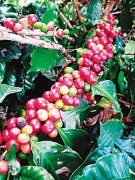
Coffee treasures from the hometown of giant turtles, the Galapagos Islands.
The term "fine coffee" was first put forward by Ms. Knudsen of the United States in Coffee and Tea magazine. At that time, Ms. Knudsen, as a coffee buyer at B.C. Ireland in San Francisco, was very dissatisfied with the neglect of the quality of raw coffee in the industry, and even some big roasters mixed a large amount of Robesda beans in the comprehensive beans, so she put forward the concept of boutique coffee.

The Development History of Coffee in China: the Development History of Yunnan Fine Coffee and the taste of small Coffee
Professional coffee knowledge exchange more coffee bean information please follow the coffee workshop (Wechat official account cafe_style) Chinese coffee Yunnan Yunnan is one of the earliest provinces in China to grow coffee. At the end of the 19th century, missionaries from Europe went to Yunnan Dali and other places to preach, bringing coffee seeds to Yunnan. In the early stage after liberation, Lujiangba in Baoshan was successfully planted, and it was found that the adaptability was good.
Coffee treasures from the hometown of giant turtles, the Galapagos Islands
Boutique coffee beans must be excellent varieties, such as the original bourbon species, mocha species and Tippica species. The coffee beans produced by these trees have unique aroma and flavor, which is far from that of other tree species, but the relative yield is low. in recent years, in order to pursue the ability of disease and insect resistance and increase the yield, there have been many improved tree species, such as the massive promotion of high-yield rurial11 species in Kenya.

Introduction to the treatment method of planting and Development History of single Bean Flavor in Hasunda Coffee Garden
For the exchange of professional baristas, please follow the coffee workshop (Wechat official account cafe_style) Ecuador Ecuadorian population: 15224000 Ecuadorian coffee is increasingly prominent in the boutique coffee industry, although low-lying areas are unlikely to produce good coffee, but higher areas have great potential. GALAPAGOS Galapagos Islands GALAPAGOS a small amount of coffee

Introduction of Ecuadorian coffee which can be made into high-quality mixed coffee and suitable for various uses
As coffee is consumed by people all over the world, the world coffee industry is also moving towards mass production, while St. Cristobal, a small and unreliable coffee industry, is in trouble and is likely to be forced to give up without profit. It wasn't until the early 1990s that the Gonzalez family bought Hasunda Coffee Park. Humboldt current (HumboldtCu
Coffee planting History of Coffee introduction and expansion in China in the early stage (3)
1. Investigation on the year of coffee introduction in Hainan Island in 1898 1.1 the age of the early introduction of coffee in Hainan Island is indisputably expressed as 1908 in many local chronicles, agricultural history, agricultural history and various books and periodicals in China. However, the remains of the century-old coffee trees in Hainan Island are still there, and the descendants of the ancient trees are still there. Therefore, the century-old coffee trees that actually exist in Hainan have unequivocally rewritten Hainan.

Ecuadorian coffee Ecuador Galapago coffee introduction
Professional coffee knowledge exchange more coffee bean information please follow the coffee workshop (Wechat official account cafe_style) Galapagos means "tortoise" in Spanish, the island has the famous Galapagos tortoise. Located in the Galapagos Islands, Ecuador, it is recognized by the United Nations Educational, Scientific and Cultural Organization (UNESCO) as the World Natural Heritage site of human culture. it is prohibited to use any chemical fertilizer.